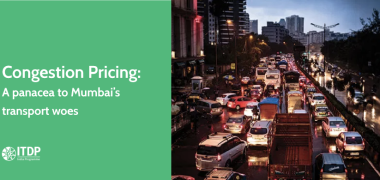
Our cities are choked with polluted air. Three of the top 10 most polluted cities in the world are in India. The number of vehicles in many Indian cities is growing more rapidly than the population. Transport is the fastest-growing source of carbon emissions in India, responsible for almost 15% of the country’s CO2 emissions, over 90% of which comes from road transport.
Low Emission Zones (LEZ) can be an innovative and powerful way to improve the air quality in our cities by reducing the number of polluting vehicles in our cities and accelerating the transition to cleaner vehicles. LEZs are geographically demarcated areas in cities where the circulation of polluting vehicles is regulated and a set of mobility interventions are implemented to control and mitigate vehicular emissions with the aim of improving air quality.
Cities have an urgent need to clean up their air and create more liveable cities for their citizens, and low emission zones can be one of their strategies to get there, alongside improving less polluting modes like walking, cycling, and public transport.