India’s urban population will grow from 419 million people in 2015 to 583 million people by 2030, an increase of nearly 40%. Stated in another way, Indian cities will house the entire present-day population of its eastern neighbour, Bangladesh (presently eighth in the world with 166 million). With the population rapidly expanding, the urban transportation issues are expected to get bigger. Sustainable mobility measures are critical for the future of Indian cities.
In such a climate, we are taking on the challenge for better streets, better cities, and better lives by transforming the quality and availability of our basic rights – walking, cycling, and public transport. Our work over the past 20 years has impacted the lives of 150 million Indian citizens across 100 ‘smart’ cities.
We work with cities to design and implement sustainable transport projects, and provide policy solutions to enhance social inclusion, reduce dependency on limited resources, improve road safety, and reduce carbon emissions.
We work to meet this vision by focusing on these key areas of sustainable transportation.
Click on the images below to learn more.
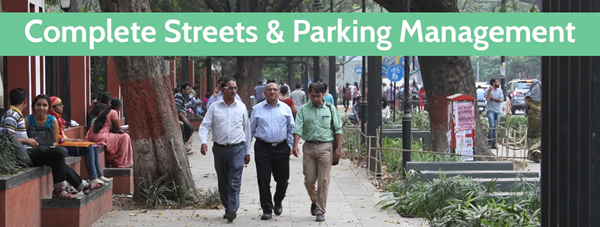
We believe that creating Healthy Streets—streets that prioritise walking, cycling, and access to public transport—will not only improve road safety but also reduce greenhouse gas emissions, improve access to economic opportunities, and create a people-friendly city for all.