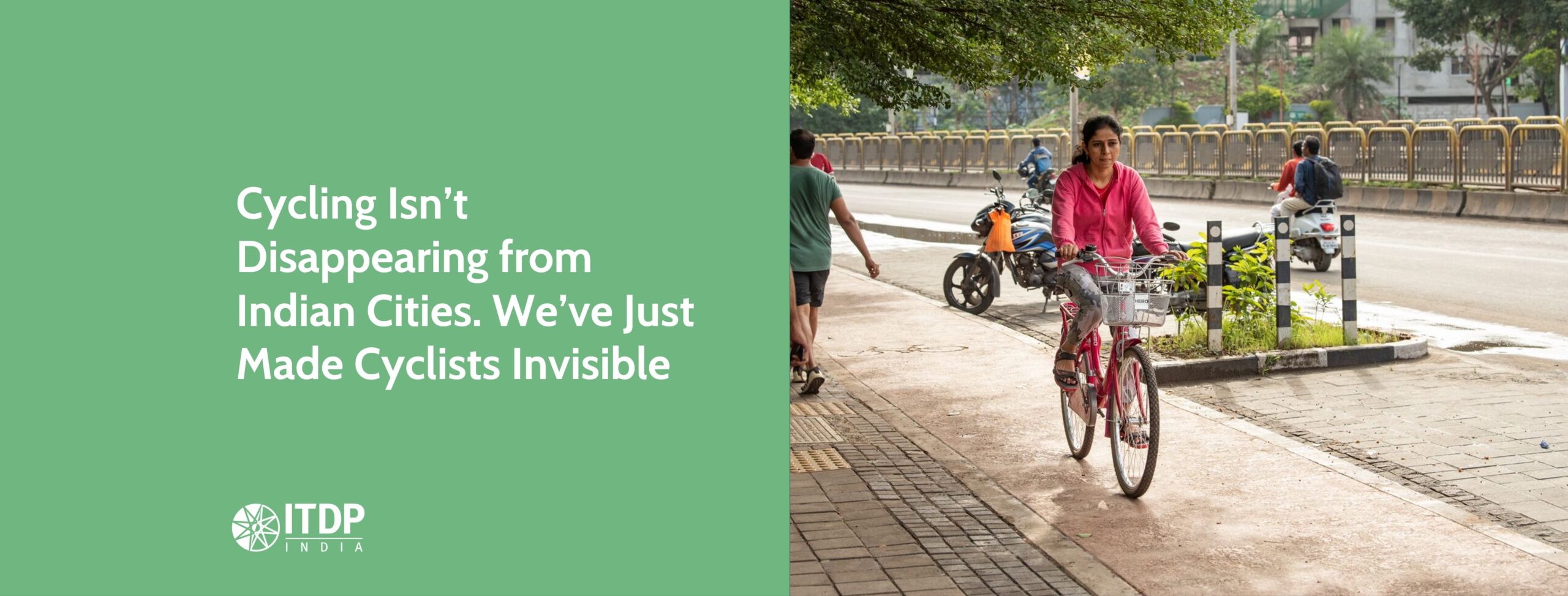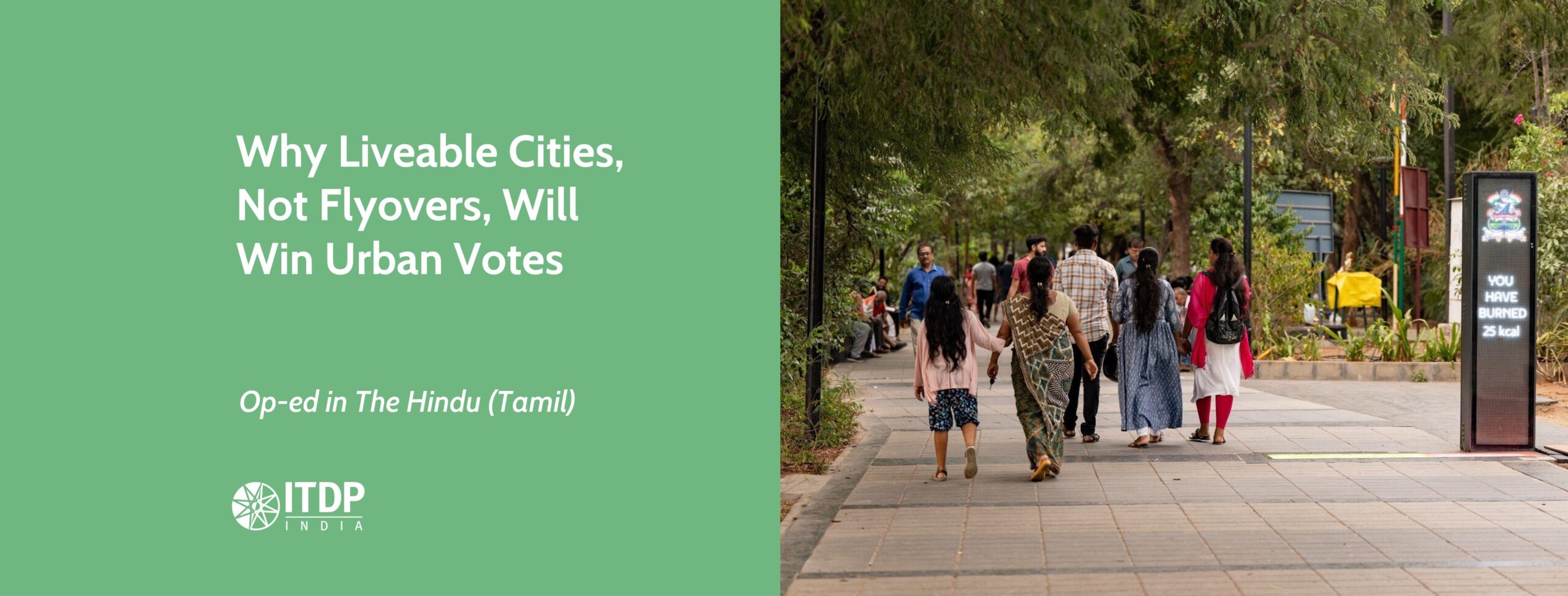
Across India, a paradigm shift is happening. Cities are reimagining their streets, as places for people and not just for cars; redefining streets as destinations, and not just a by-pass; redesigning streets to create a thriving environment where everyone can experience their streets in a fun and safe way, at all times, day or night. The result? People love it, and many more are embracing walking and cycling, enjoying their time on the streets!
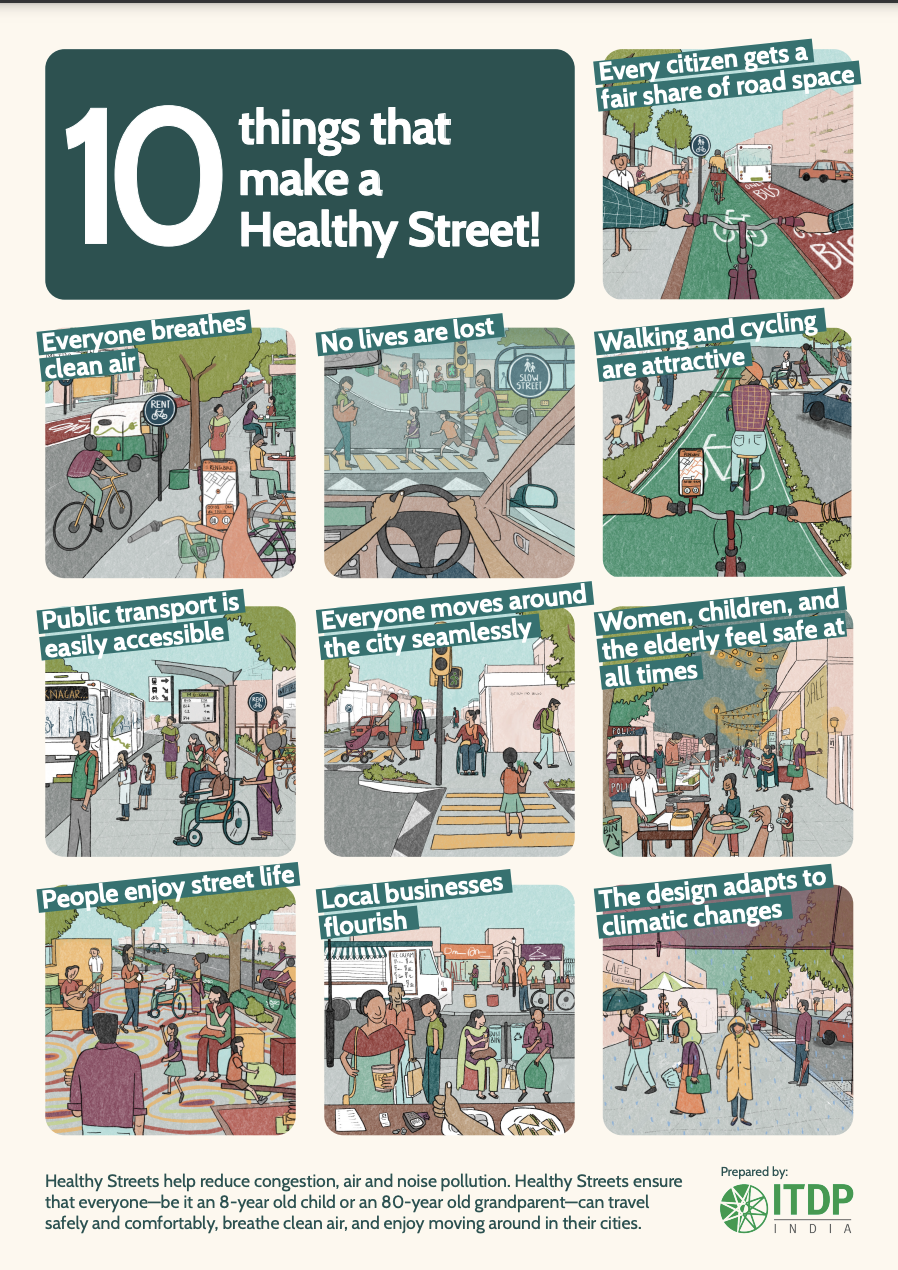
This is the start of the #HealthyStreets movement—that aims to reduce congestion, air & noise pollution, and carbon emissions across Indian cities. Healthy Streets ensures that everyone—be it an 8-year-old or an 80-year-old—can move safely and comfortably, and breathe clean air. Here’s an illustrated guide of 10 things that make a Healthy Street!
The transformation is happening, slowly but surely. Here are a few cities that have embarked on the #HealthyStreets movement, and are now an inspiration for many other cities to follow too.
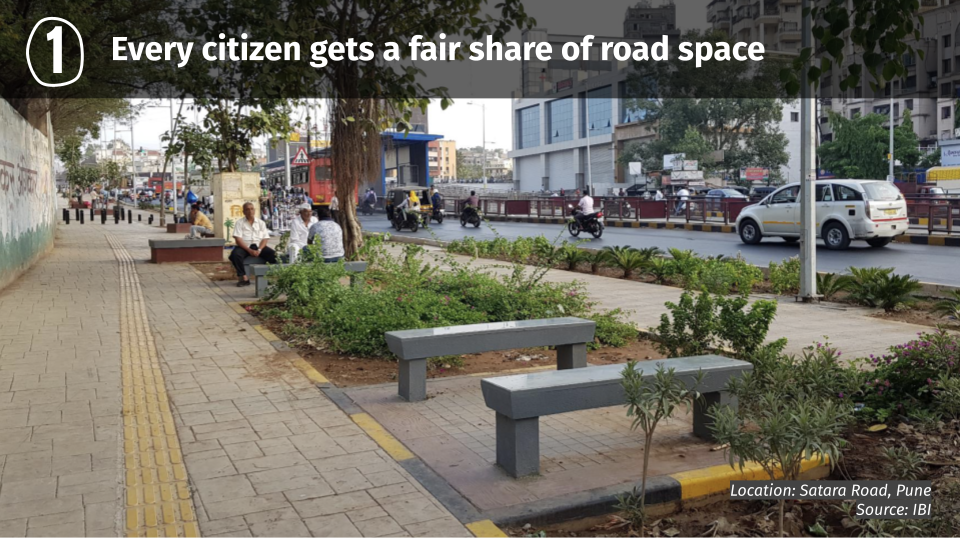
ensuring a fair share of the space for all users.
Road space is limited, and presently, most of it is occupied by personal motor vehicles—such as cars and two-wheelers. We must ensure that all kinds of users—whether they are on foot, cycling, or using public transport—get an equitable allocation of the road space.
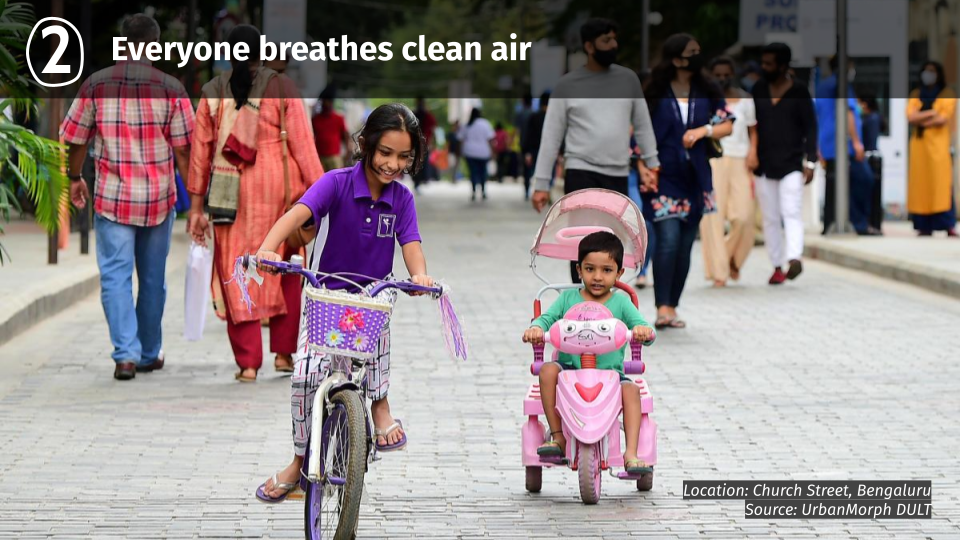
In 2015, road transport emissions contributed to 74,000 premature deaths in India. Unfortunately, people who face the grave consequences of polluted air are not even the ones who cause or contribute to it. With zero emission modes like walking and cycling, and low emission shared modes such as e-buses and e-rickshaws that use clean vehicle technology, cities can move closer to breathing air that’s healthy.
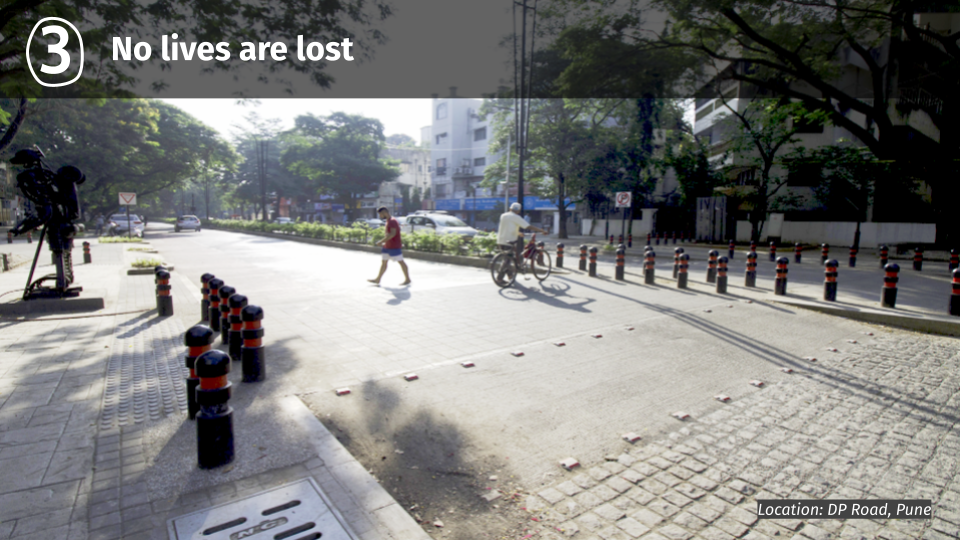
According to a World Bank report published in 2021, India has the highest number of casualties in road crashes—there are 53 road accidents in the country every hour and one death every four minutes. Road crashes claim the lives of about 1,50,000 people and disable at least an additional 7,50,000 each year, a large share of which are pedestrians and cyclists, mainly representing working-age adults from the poorer strata of society.
This is easily preventable—by designing safe streets and strictly enforcing road rules. Cities should design streets that reduce conflicts between motor vehicles and vulnerable users such as pedestrians and cyclists and encourage safe driving.
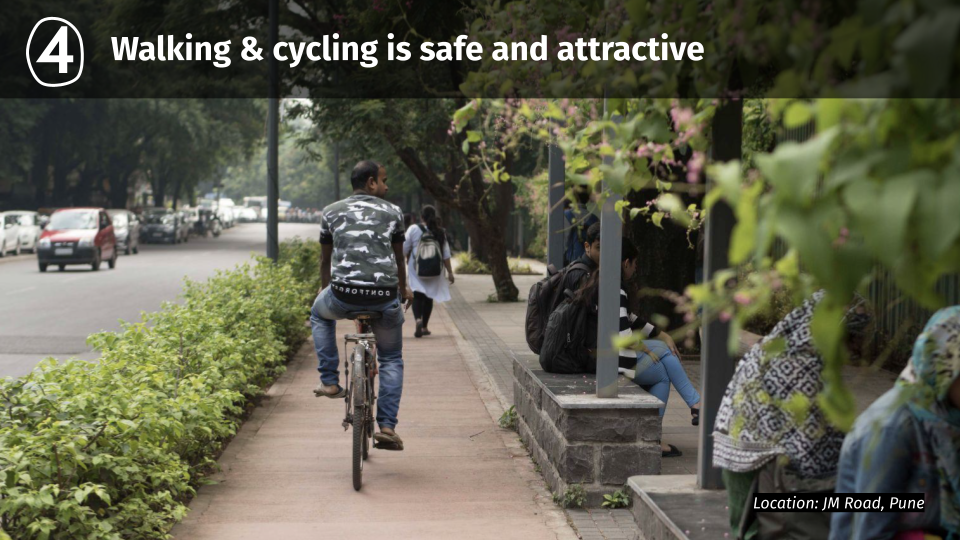
The two simplest, most affordable modes of transport deserve to be a comfortable experience for everyone. When walking and cycling is made safe and attractive—with wide, continuous footpaths, segregated cycle tracks, regulated on-street parking, managed vending, shaded seaters, and play zones—everyone would choose to walk and cycle instead!
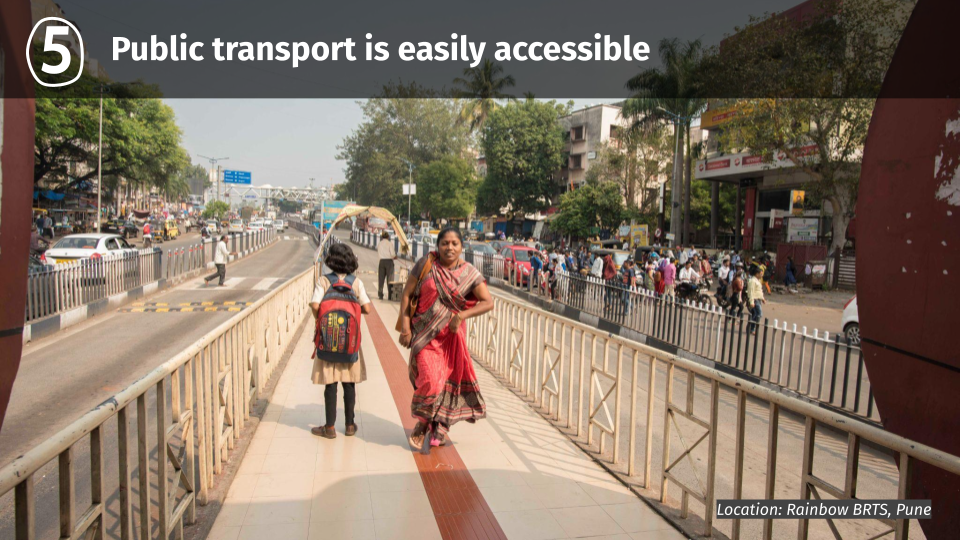
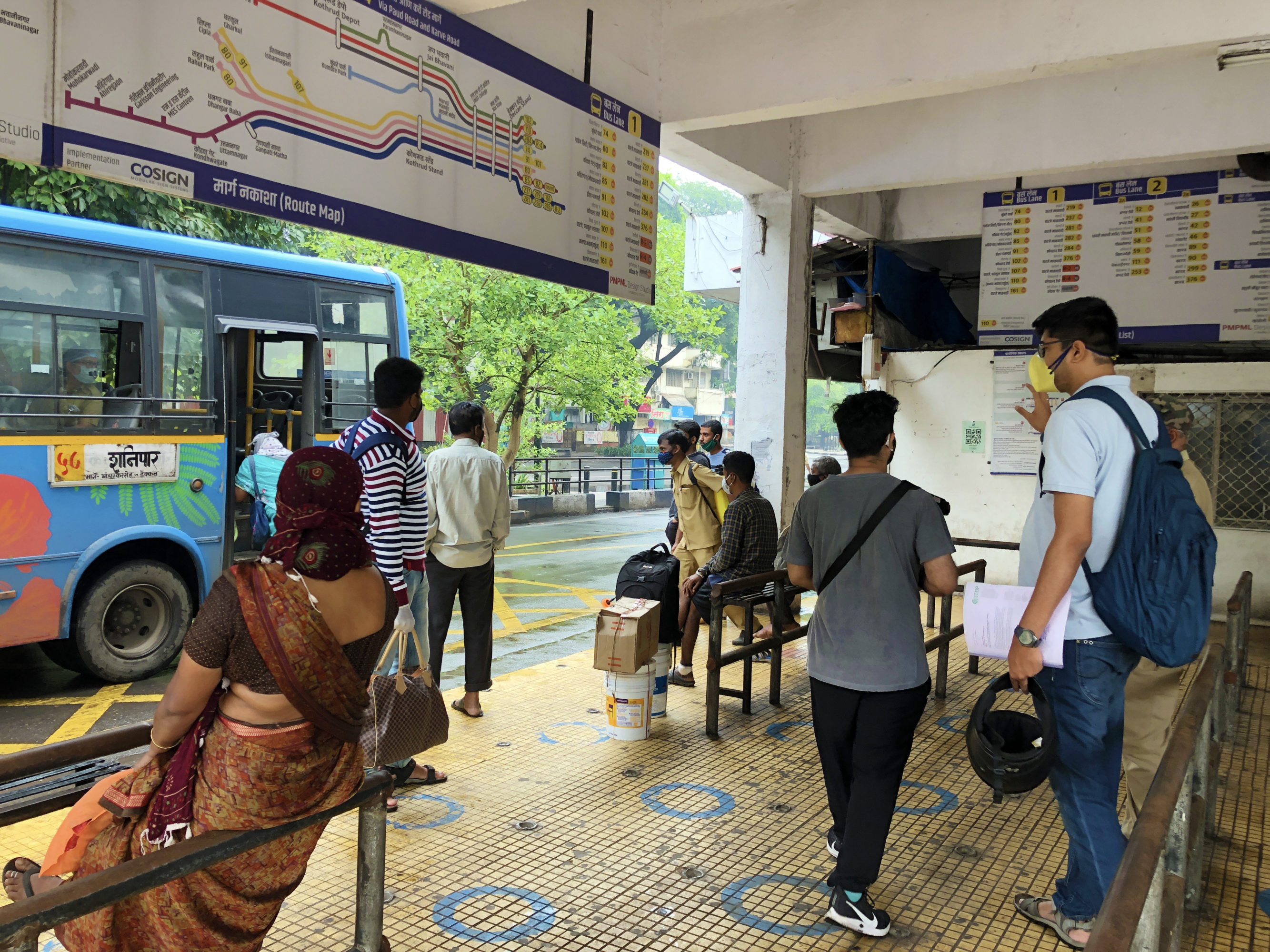
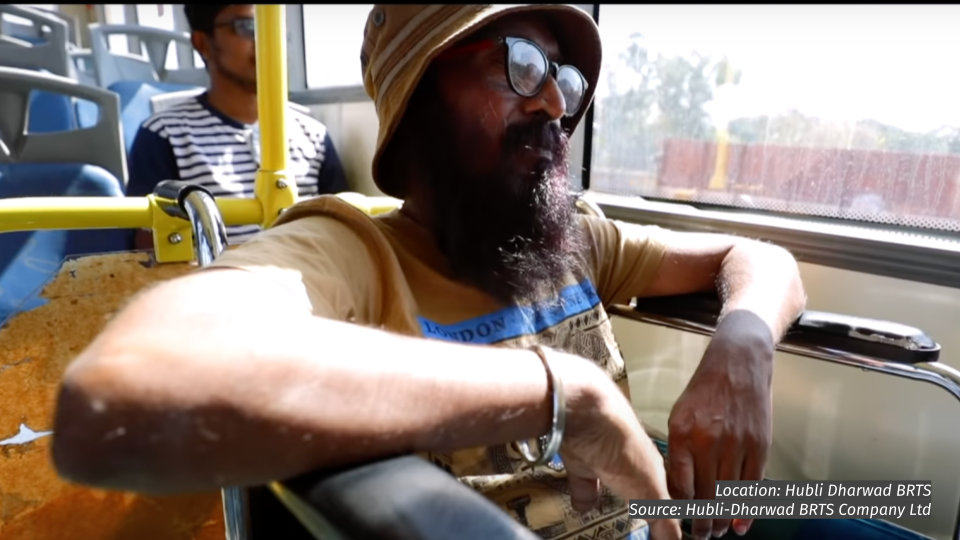
Public transport is the pulse of every city that has the power to connect people to opportunities. 70% of Delhiites use public transport to commute to work, as per the 2019 Socio-Economic Survey report. Public transport, especially buses, is often the most affordable means of transport for the majority, especially for women. Most of these public transport trips typically start or end with a walk, or on a cycle.
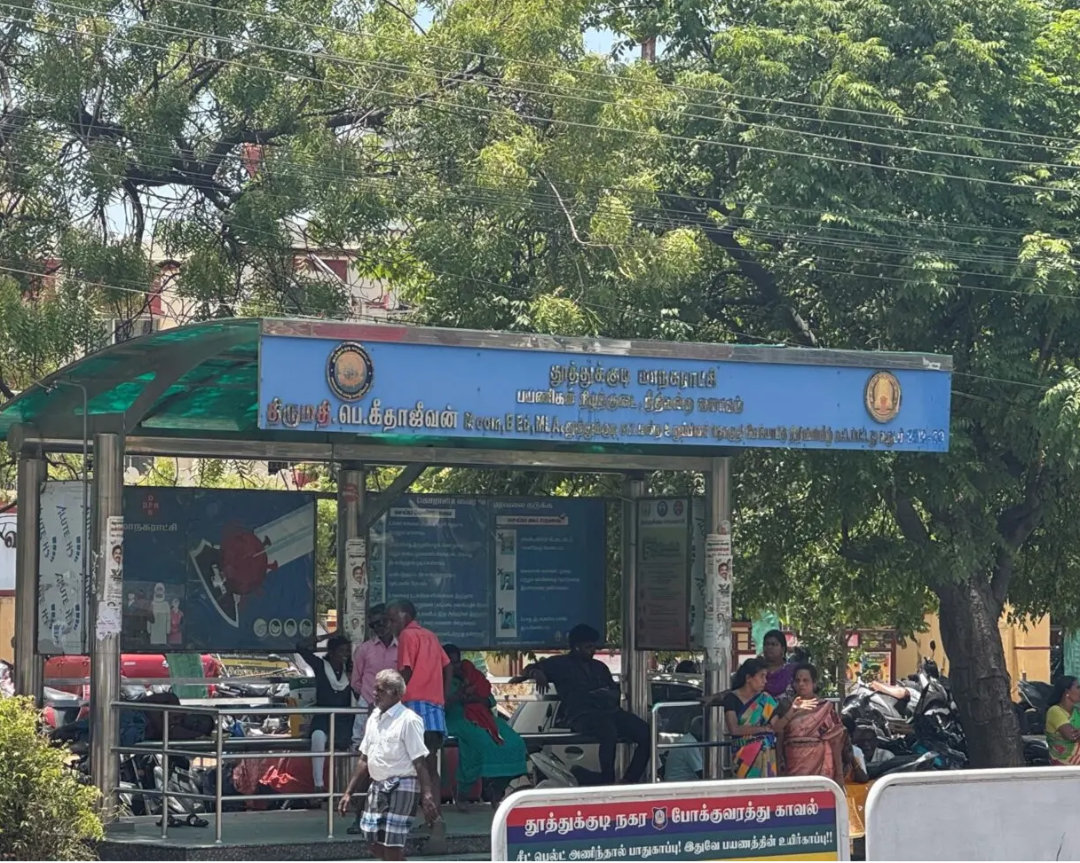
By ensuring that public transport services are within easy reach and interconnected by walking and cycling facilities, and that stops provide safe shelter for everyone at all times, would enable more people to use the services conveniently.
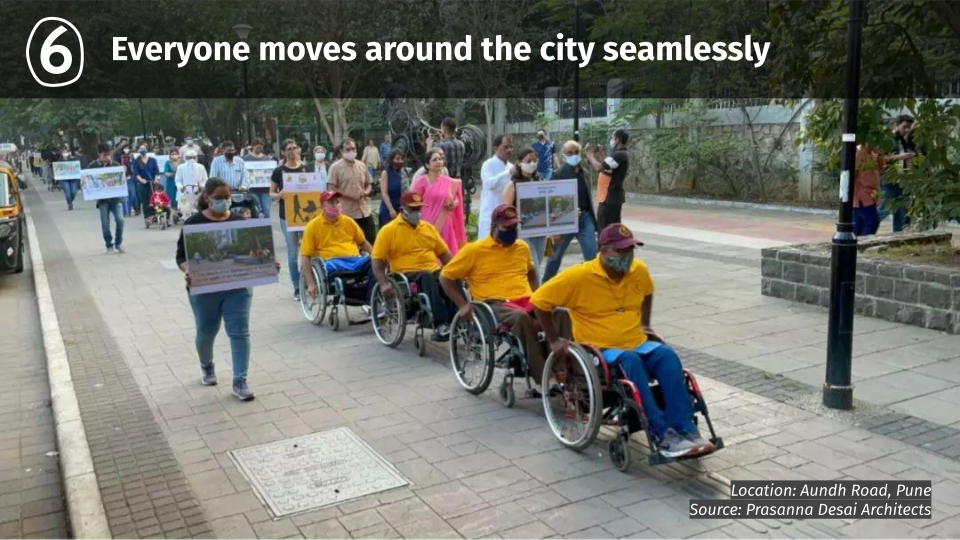
Our streets need to cater to people of all demographics, age groups, and abilities. A large group of our population: caregivers with infants and toddlers; the elderly; and people with disabilities—are often left out in urban design and transport planning, severely impacting their independent mobility.
Cities must ensure that transport infrastructure meets the needs of these vulnerable groups, by ensuring streets and public transport are universally accessible.
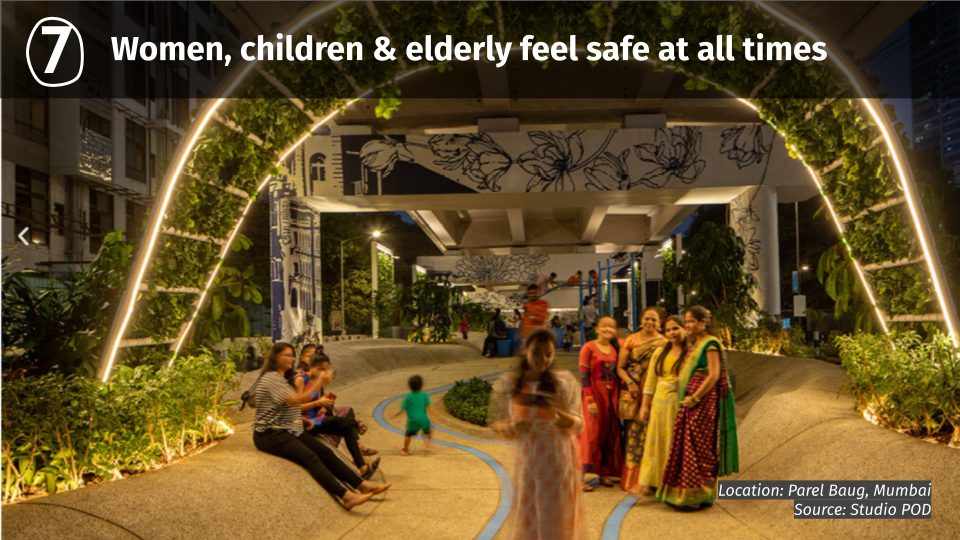
An article by Safetipin notes that street harassment disproportionately affects women throughout their lives. It is part of a larger epidemic of violence posing a significant threat to women’s autonomy, and ultimately, it becomes a violation of consent in public, driving women to retreat to private spaces and curtailing their freedom.
Vulnerable groups such as women, children and the elderly need to feel safe on our streets and in public spaces. Cities must eliminate opportunities for crime on their streets through programming, better design, ample lighting, and activity management.
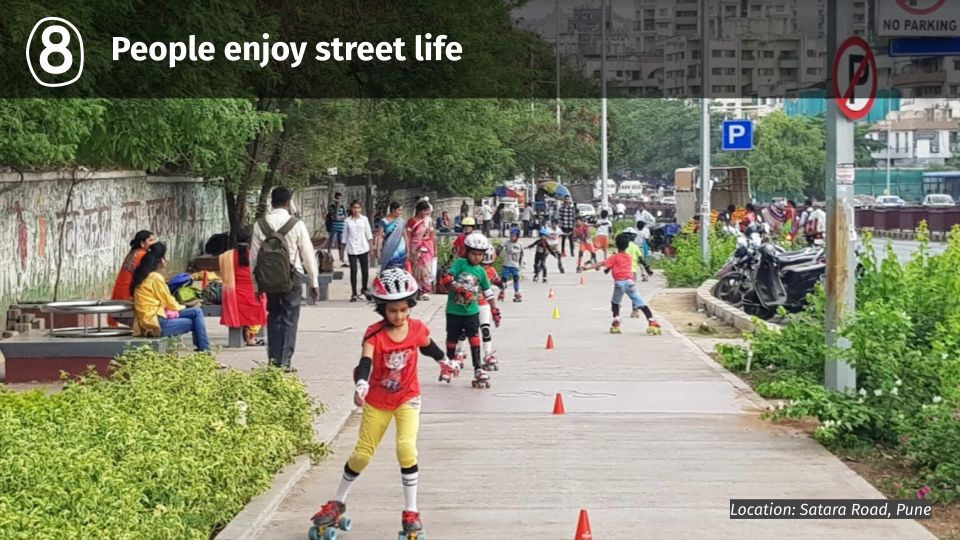
Streets are important social spaces that enable us to interact with other people and the environment.
Cities must think of streets as vibrant public spaces that invite everyone—including women, children and the elderly—to spend more time outdoors and socialise, thus improving the mental and physical well-being of citizens. When streets are designed for walking and cycling, they become platforms for unplanned interactions and help foster a sense of community.
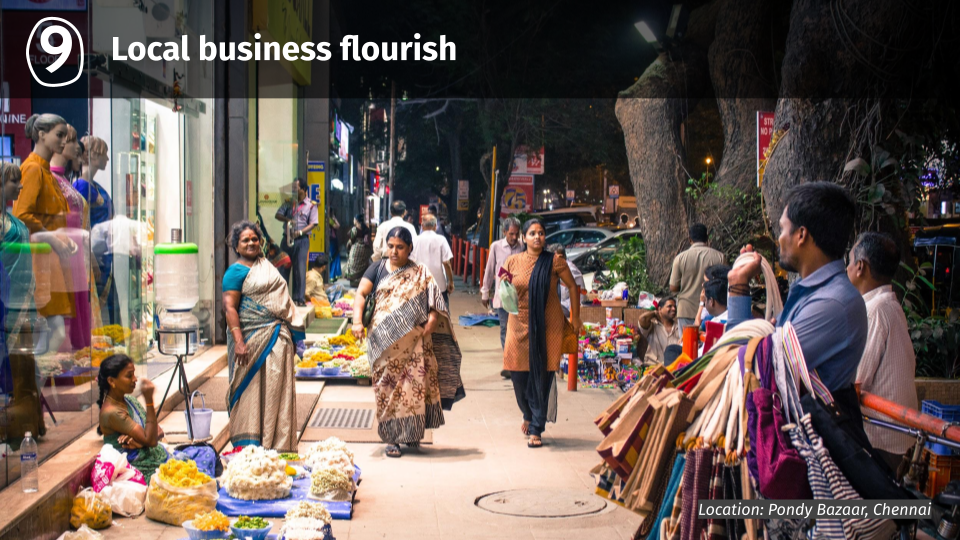
There is a strong correlation between well-designed streets and its impact on local businesses. When streets allow people to move comfortably without any conflicts with traffic, are well shaded, and have amenities for them to sit and rest, they tend to spend much more time on the street, which results in a sales boost for local vendors and shops. Cities can enhance livelihoods by integrating street vending and local retail businesses in street design.
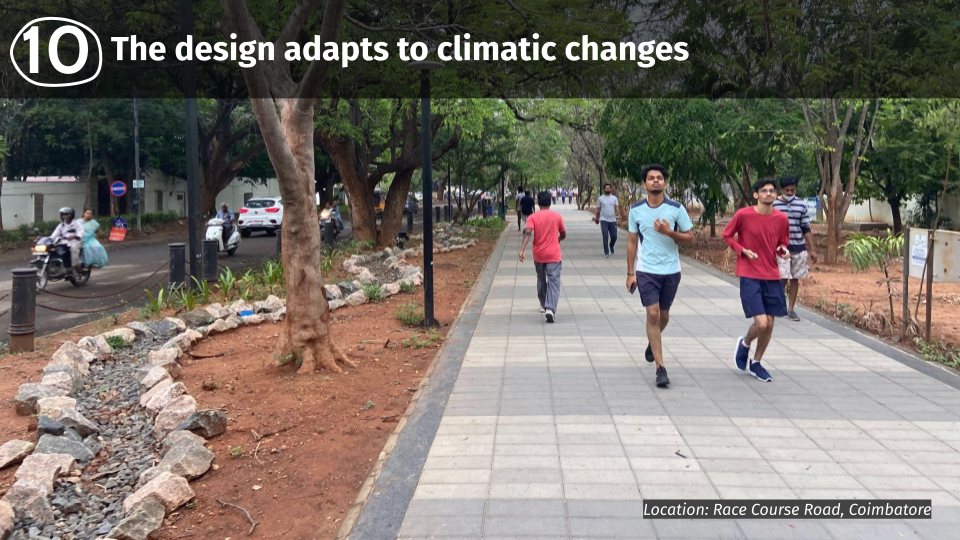
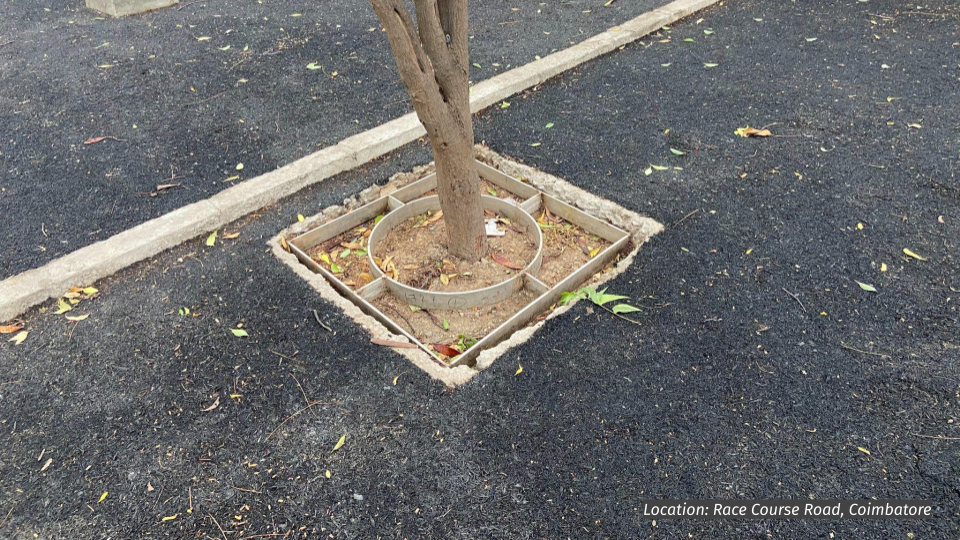
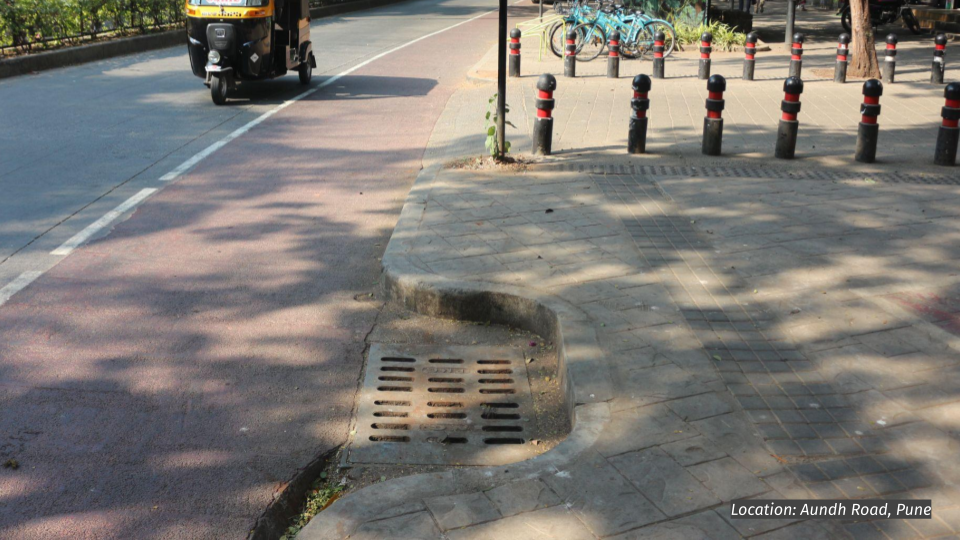
It isn’t uncommon to see streets inundated with water, following a spell of heavy rains. Footpaths get slippery, posing a risk for the ones who are running for shelter. Our streets need to be resilient to such weather changes and be usable by people all year round.
Cities need to use materials and designs that enhance the life of infrastructure, ease maintenance, and are responsive to the environment. Underneath the footpath, utility lines such as water supply, electricity, street lighting and other fixtures, stormwater, sewage, and telecommunications must be routed via ducts or trenches, accessed through conveniently placed manholes. Gratings that lead to catchment pits should be provided. Cities must also choose the right kind of surface treatment to ensure footpaths are durable and long-lasting.
Through the India Cycles4Change and Streets4People Challenge—an initiative of the Smart Cities Mission of the Ministry of Housing and Urban Affairs and ITDP India—39 cities are accelerating their transformation towards creating #HealthyStreets. With the test-learn-scale mantra, cities are working with residents and experts to implement permanent walking and cycling-friendly infrastructure, create institutional reforms, and build momentum for more walking and cycling-centric cities.
With such widespread enthusiasm for creating people-friendly cities in India, we hope to see many more paragons of #HealthyStreets in the future! Stay tuned.